Doubled Pawns in Chess: What Changed After the Capture?
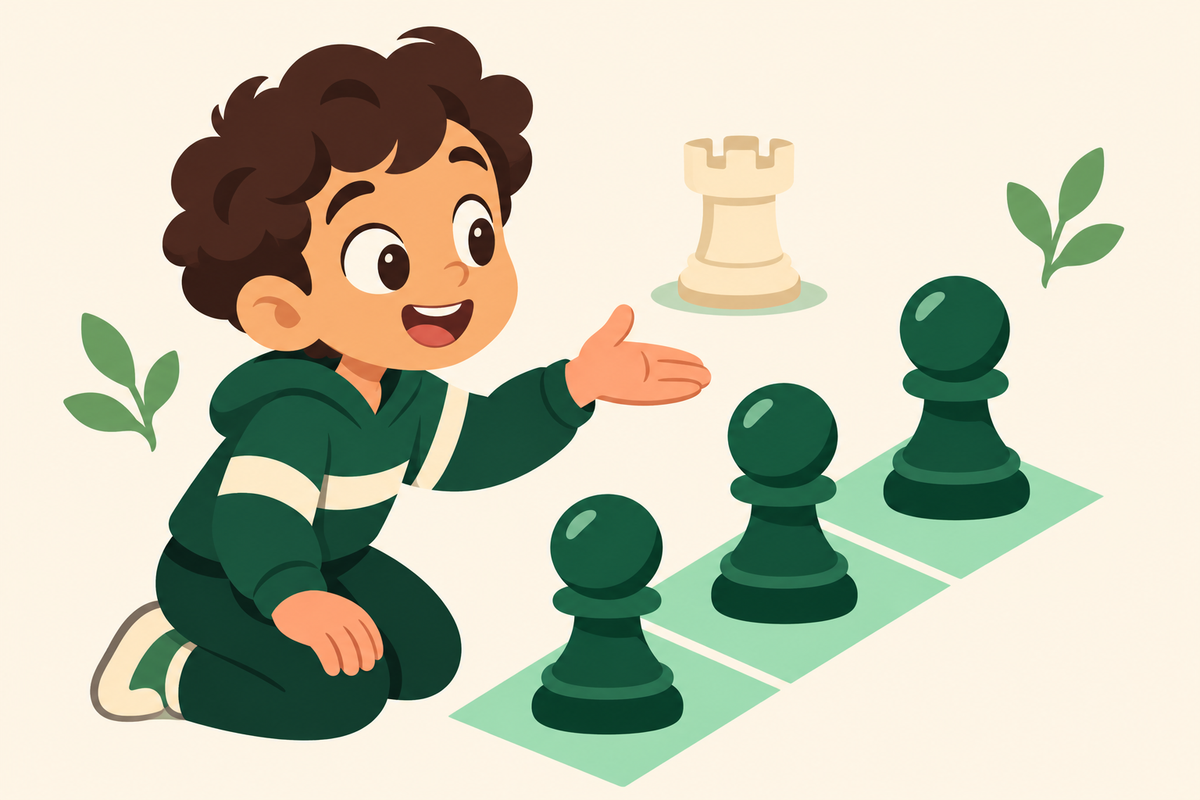
Two friendly pawns on one file are doubled. Before calling the position bad, check what the capture won, which lines opened and how the pawns are supported.
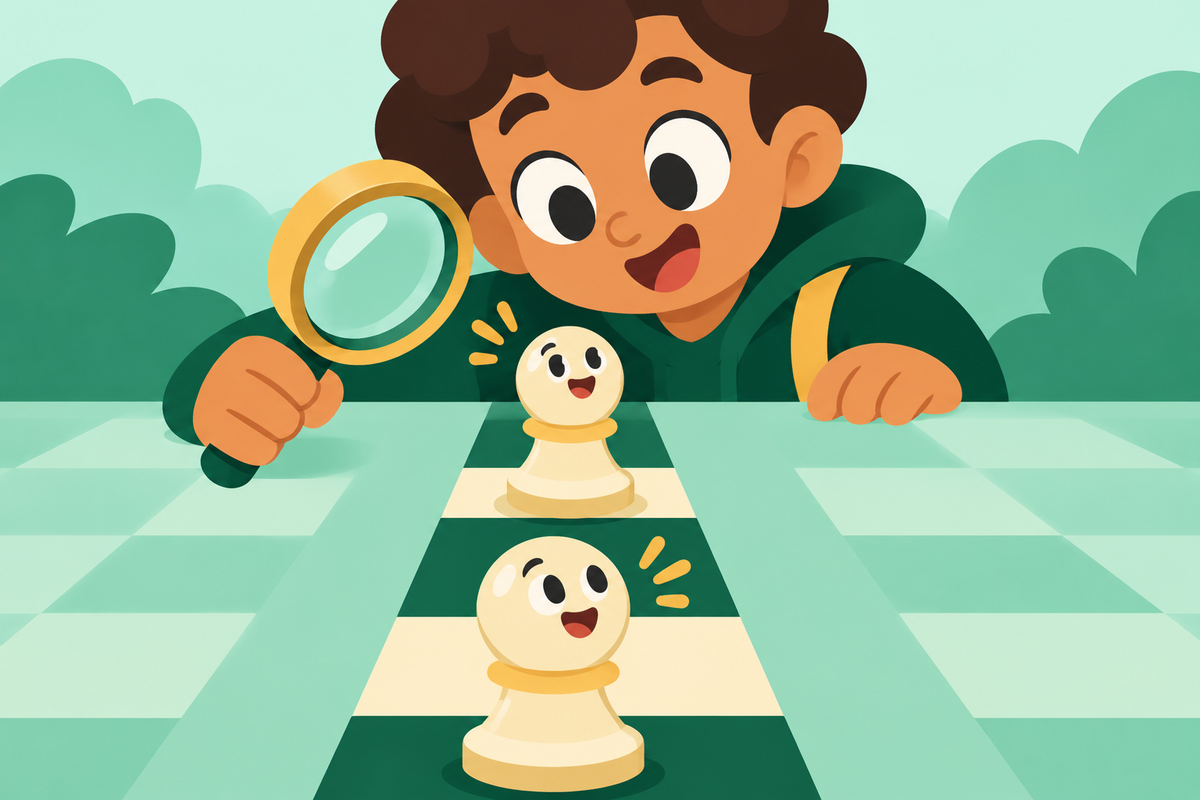
Doubled pawns are two pawns of the same colour on the same file, or vertical column. They can appear when a pawn captures onto a file that already contains a friendly pawn. The shape is worth noticing, but it does not by itself tell you whether the move was good or bad.
For a beginner reviewing a game, the useful question is “What changed after that capture?” Look at the material, king safety and available lines as well as the pawn arrangement.
Spot the same-file pattern
Two white pawns on c2 and c3 are doubled because both occupy the c-file. They do not have to sit on neighbouring squares: white pawns on c2 and c5 are also doubled. A white pawn on c2 and a black pawn on c5 do not form a doubled pair, because they belong to different sides.
Do not confuse this with an isolated pawn. Doubled describes pawns sharing a file. Isolated describes the absence of friendly pawns on the neighbouring files. A pair can be doubled and isolated, or doubled with other friendly pawns nearby.
Trace the capture that created them
Imagine a fragment from a game: White has pawns on b2 and c2, and a black piece has arrived on c3. If b2 takes c3 legally, the result is white pawns on c2 and c3. The b-pawn changed files by capturing; the c-pawn stayed where it was.
This is a description of a pawn-pattern change, not a complete legal position or a recommendation to make that capture. In an actual game, the move must also leave White’s king safe. FIDE’s pawn rules in Article 3.7 distinguish advancing straight ahead from capturing diagonally.
When replaying your child’s game, stop before the capture and ask them to point to both the starting square and destination. Then make the recorded move and name the file occupied by each pawn. This connects the vocabulary to something they actually played.
Ask what the pawns can do
A pawn cannot advance into an occupied square. The front pawn can therefore limit the rear pawn’s route, depending on the gap between them. Pawns also capture diagonally, so two pawns on the same file do not directly protect one another.
Now inspect the rest of the board. Are other pawns or pieces defending them? Which squares do they attack? Can an opponent reach a target safely? Naming a weakness is less useful than pointing to the actual threat and explaining a possible reply.
Do not reject a capture just because it doubles pawns
In The Truth About Doubled Pawns, GM Gregory Serper challenges the idea that the doubled shape alone proves a position is bad. His examples distinguish the shape from separate issues such as isolation and king exposure.
In your own review, keep a simple before-and-after note. What did the capture gain or give up? What square or line became available? What now needs protection? Our guide to open files can help explain why a change in pawn placement also changes a rook’s options.
If two recaptures are possible, compare the resulting boards with a coach. Do not choose automatically by which pawn arrangement looks tidier. Equally, do not ignore an exposed pawn just because doubled pawns can sometimes be useful.
Take one concrete question to the next lesson
Save the position and ask, “After this capture, what became easier or harder for each side?” Let your child explain their first observation before showing an engine evaluation. A free Project64 online demo is a chance to discuss their current level and the kinds of game-review questions they would like help answering.