Tempo in Chess: What Did Your Move Achieve?
A tempo is a move’s worth of time on the board. Look at what a move achieves, what reply it invites and whether the piece remains useful afterwards.
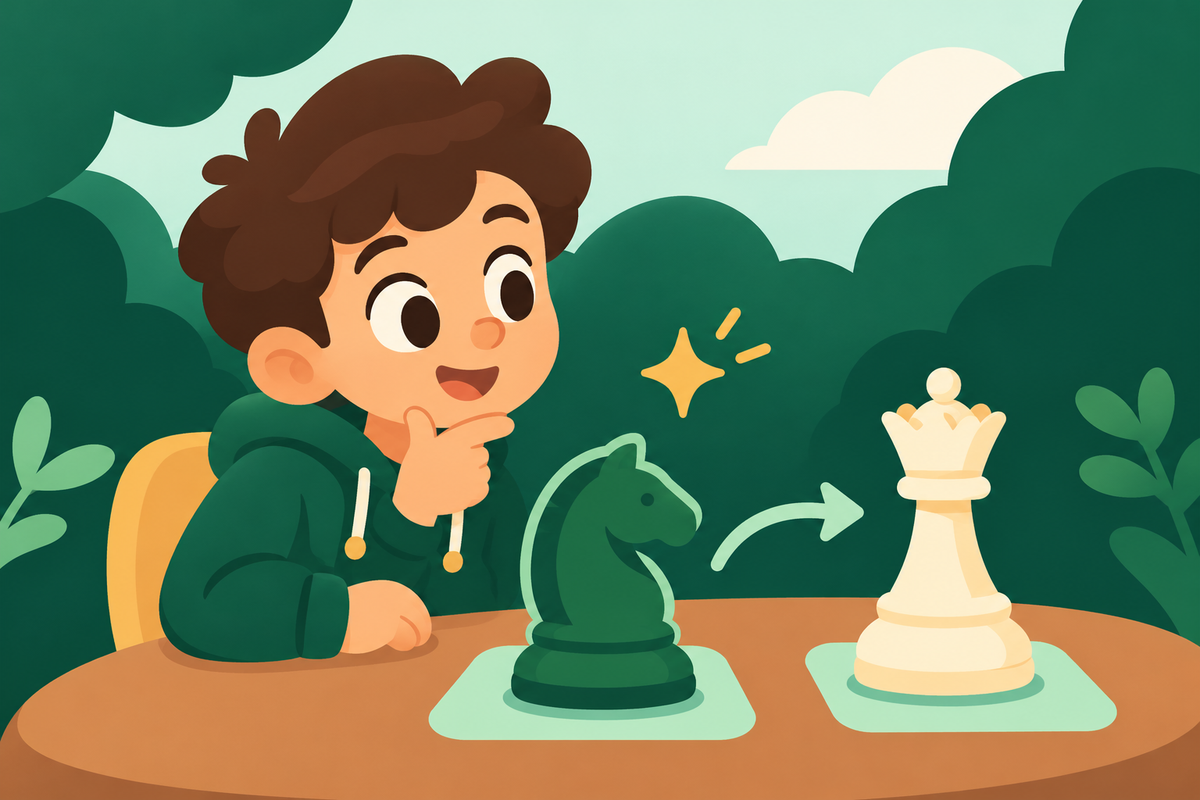
A tempo in chess is a move’s worth of time on the board. Gaining a tempo often means making progress while creating a threat the opponent needs to answer. It does not mean moving your hand faster or gaining seconds on the clock.
The useful question is, “What did this move achieve?” A move that brings a piece into play and makes the opponent deal with a real problem may do two jobs at once. The tempo explainer introduces this idea through development and threats against a queen.
Separate board time from clock time
You can think carefully and still make an efficient move. You can also play instantly and spend several turns moving the same piece without improving its position. When a coach talks about losing time in the opening, ask whether they mean moves on the board or minutes on the clock.
If the concern is rushing, our guide for a child who plays chess too fast addresses that different habit. Tempo is a way to examine the work a move does.
Look for a useful move with a useful threat
Imagine that a developing move also attacks the enemy queen, and the opponent must spend their reply moving it to safety. If your piece has reached a useful square, you have made progress while the queen has had to respond. That is the kind of situation players describe as gaining a tempo.
This is a general pattern, not an instruction for a particular position. Before trying it, check that the move is legal, your piece is safe and the opponent has no stronger reply. A queen attack can fail if it leaves your king in danger or allows an important piece to be captured.
Moving a piece twice can have a good reason
Development advice often encourages beginners to bring more pieces into the game. That is a helpful starting habit, but a piece may need to move again to escape an attack, recapture or carry out a sound plan. Counting moves alone cannot tell you whether a decision was good.
Ask what would happen if the player refused to move the piece. If the answer is that it would be lost for nothing, saving it may be essential. Our opening-principles guide explains the broader goals to keep in view.
Try a move-purpose review
Choose the opening of one completed game. Review a short stretch before switching on the engine, using three notes for each move:
Purpose: what did the player seem to be trying to improve or protect?
Reply: what did the opponent do, and did a threat need answering?
Result: after that reply, was the moved piece doing a useful job?
It is fine to write “I am not sure.” That gives the coach a question to discuss. If a move seems wasteful, compare it with a specific alternative and examine the opponent’s reply to that alternative too. Our candidate-moves guide helps with that comparison.
A tempo is one part of the position
A check or attack is not automatically the best move. Compare king safety, material and what each side can do next. Encourage your child to explain the gain they expect instead of choosing a move simply because it forces a reaction.
If your child knows the rules but finds it hard to give their moves a purpose, a free Project64 online demo is a chance to discuss their starting level and the kind of practice that could help.