Open Files in Chess: Give Your Rooks a Useful Job
An open file has no pawns from either side. Before moving a rook there, check the route, the entry square and what the rook could actually do next.

Open files are columns of chessboard squares with no pawns of either colour. They can give a rook room to work, but an open file is not automatically a safe or useful destination. Look for a clear route, a square the rook can use and something worth attacking or defending.
Open and half-open describe the pawns
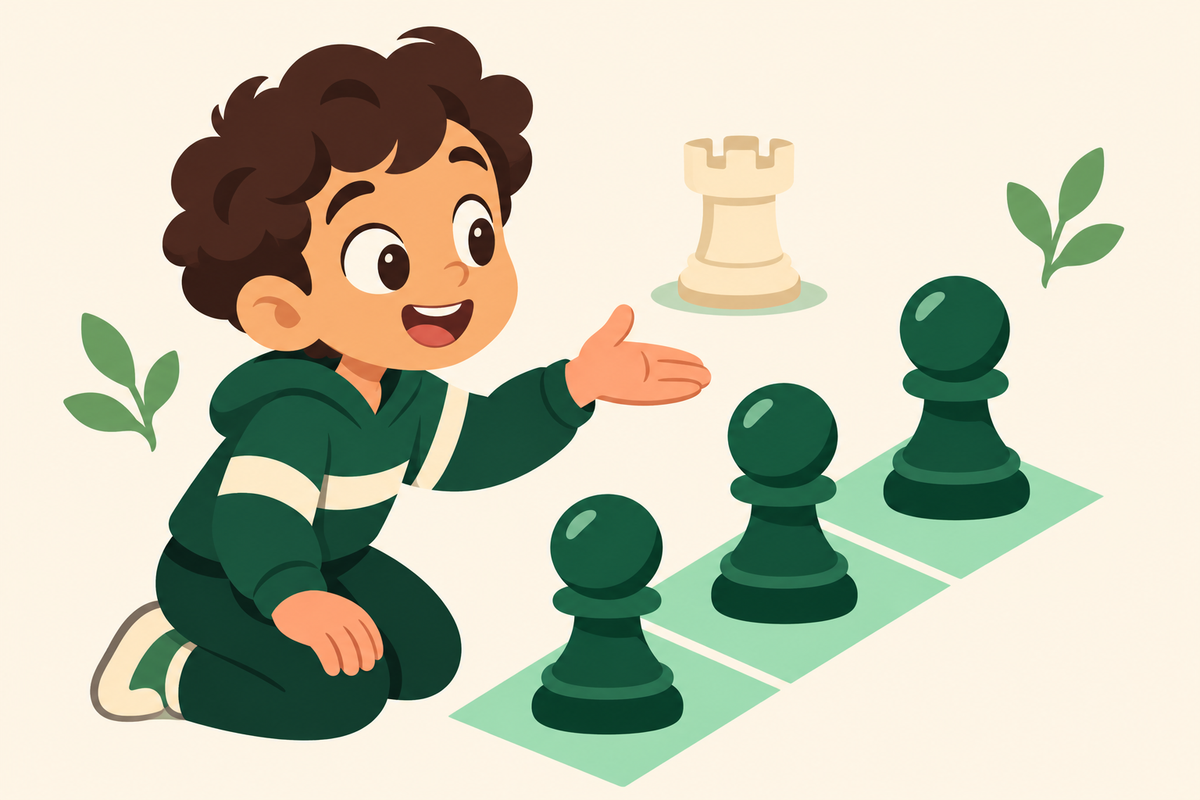
A file runs along a lettered column, such as the a-file or d-file. If neither side has a pawn anywhere on that column, it is open. If your side has no pawn there but the opponent does, it is half-open for you. These terms describe the pawn structure; other pieces may still occupy the file.
The distinction appears in the teaching manual Journey Through Chess. For a child, the first exercise can simply be to look for pawns before deciding what to do with a rook.
Why rooks are interested in open files
A rook moves along ranks and files and cannot jump over another piece. A column without pawns can therefore offer a route into the position. This rook movement and activity guide illustrates why clear lines matter.
However, “no pawns” does not mean “no danger”. An enemy bishop might control the square you want to enter. Your own knight might block the route. Moving the rook might abandon a pawn or a square near your king. Treat the open file as an idea to investigate, not an instruction to ignore the rest of the board.
A three-question rook check
After checking any immediate threats against your king or pieces, compare a possible rook move with these questions:
Can I get there safely? Trace the entire route and check the destination. Also ask what the rook currently protects before moving it away.
Where would I go next? Point to a useful entry square or target. If you cannot identify one, owning the file may not yet achieve much.
What can my opponent do? Look for an attack on the rook, a block, a trade or a stronger threat elsewhere.
This is a way to explain a candidate move, not a complete calculation method. If two moves both look reasonable, save the position and compare them with a coach after the game.
Try a file hunt in one finished game
Use a saved game your child has already played. Pause at a middlegame position and, on separate paper, make a small note for each file: pawns from both sides, only White, only Black or neither. Do not write these training notes during a tournament game.
Ask the child to choose one rook and name a job for it in an ordinary sentence. For example: “I want to use this file to attack that pawn.” Then ask them to point to the pawn and explain how the rook could reach it. If the route does not work, discovering why is the useful part of the exercise.
Now replay a few moves from the game. Has a pawn capture changed the available files? Does the same proposed rook job still make sense? This exercise is about noticing a changing board, not proving that the move played was the best one.
Do not open a file just to have one
A pawn exchange can remove an obstacle, but the opponent may also benefit from the new line. Before trading, compare both sides’ access and king safety. Our guide to trading pieces explains how to look beyond the first capture.
Moving both rooks towards the same file is also a decision to check, not a required follow-up. Ask whether the second rook adds useful support and whether moving it leaves another task undone. One clear purpose is better than copying a pattern without understanding it.
For help turning these observations into a plan, book a free Project64 online demo. Bring a finished game and one position where your child was unsure how to use a rook. That gives the conversation a concrete starting point.