What Is a Passed Pawn in Chess? Spot the Path Ahead
Check the pawn’s own file and the files beside it. A clear route past enemy pawns is useful, but a king or piece can still stop the journey.
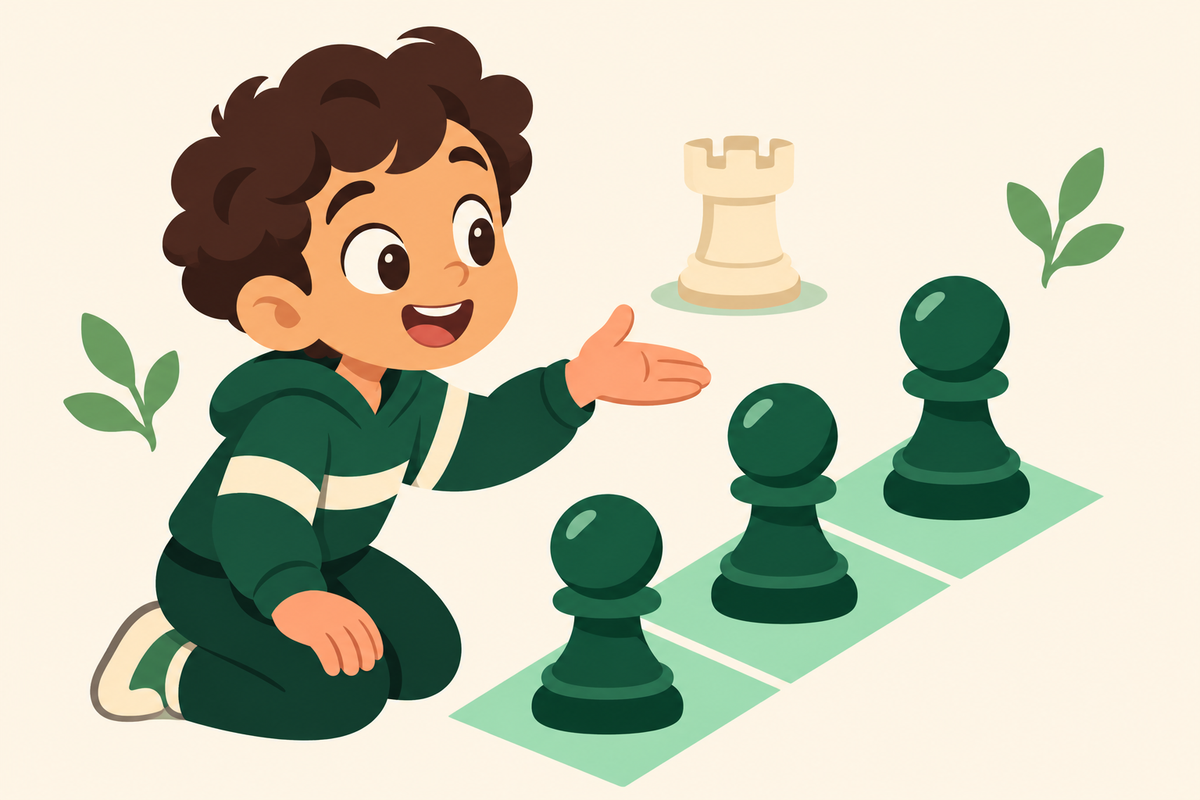
A passed pawn has no opposing pawn ahead of it on its own file or either neighbouring file. Those enemy pawns cannot stand in its path or capture it as it advances. That gives the pawn a useful opportunity, but does not mean it can safely march to promotion: enemy kings and pieces still matter.
Look at three files, not just the next square
A file is a vertical column of squares. For a white pawn on d5, check the d-file and its neighbours, c and e, towards White’s promotion rank. A black pawn farther ahead on any of those files means the d-pawn is not yet passed.
This is the basic distinction described in Edward Lasker’s Chess and Checkers: The Way to Mastership, in the section on special terms. The examples below are new teaching exercises, not positions copied from the book.
A black pawn on d6 blocks the route directly: the white pawn on d5 is not passed.
A black pawn on c6 attacks d5: looking only at the empty square d6 would miss the problem.
If Black’s only pawns are on a6 and h6, none is ahead on c, d or e. The white d5-pawn is passed.
For a black pawn, reverse the direction of the inspection: Black’s pawns advance towards the first rank. A pawn on the edge has only one neighbouring file to check.
Try a passed pawn that cannot simply run
The interactive example below starts with White’s king on e3 and pawn on d5. Black has a king on d7 and pawns on a6 and h6. White moves first. Select Starting position to see the setup before playing the two moves.
White’s d-pawn is passed, because neither black pawn is on its own or an adjacent file. Now follow 1. d6 Kxd6. White pushes the pawn, and Black’s king captures it. The white king on e3 is too far away to protect d6.
Nothing about the definition has been broken. “Passed” describes the relationship to opposing pawns; it is not a shield against a king, rook, bishop, knight or queen. This short line illustrates an unsafe push, rather than a best-play verdict on the whole position.
Ask what supports the next step
Before pushing a passer, point to its next square and name every opposing piece that attacks it. Then ask what protects the pawn after it moves. If you cannot answer, leave the piece on its current square while you investigate.
In a lesson, try looking for a useful king move or a way to remove a blocker before deciding to advance. Sometimes the opponent must spend time stopping the pawn, creating an opportunity elsewhere. In other positions the pawn is vulnerable and needs protection. The board, not a slogan such as “always push passed pawns”, decides the plan.
Passed pawn and en passant are different ideas
A passed pawn is a positional description. En passant is a special capture with strict timing after an opposing pawn’s initial two-square move. One term is not a shortened name for the other. The pawn’s movement and special-capture rules are set out in FIDE Article 3.7.
Use one question in your next game review
Choose a position with several pawns and ask your child to identify one that is passed, or explain why none is. Have them point along the relevant files before discussing a move. If a pawn is close to the end of the board, revisit how promotion works.
For help turning these observations into a plan, book a free Project64 online demo. Bring a position from your child’s game and ask them to explain which pawn they would like to advance and why.
White vs Black · *