How Many Chess Classes a Week Does a Child Need?
Choose a chess lesson schedule that leaves room to practise, ask questions and enjoy the game. Here is how to compare one lesson, two lessons and the week between them.
There is no single right number of chess classes a week for every child. One regular lesson can be a sensible starting arrangement to discuss with a coach; a second may be useful when a child wants more guidance and still has time to practise. Neither number guarantees progress.
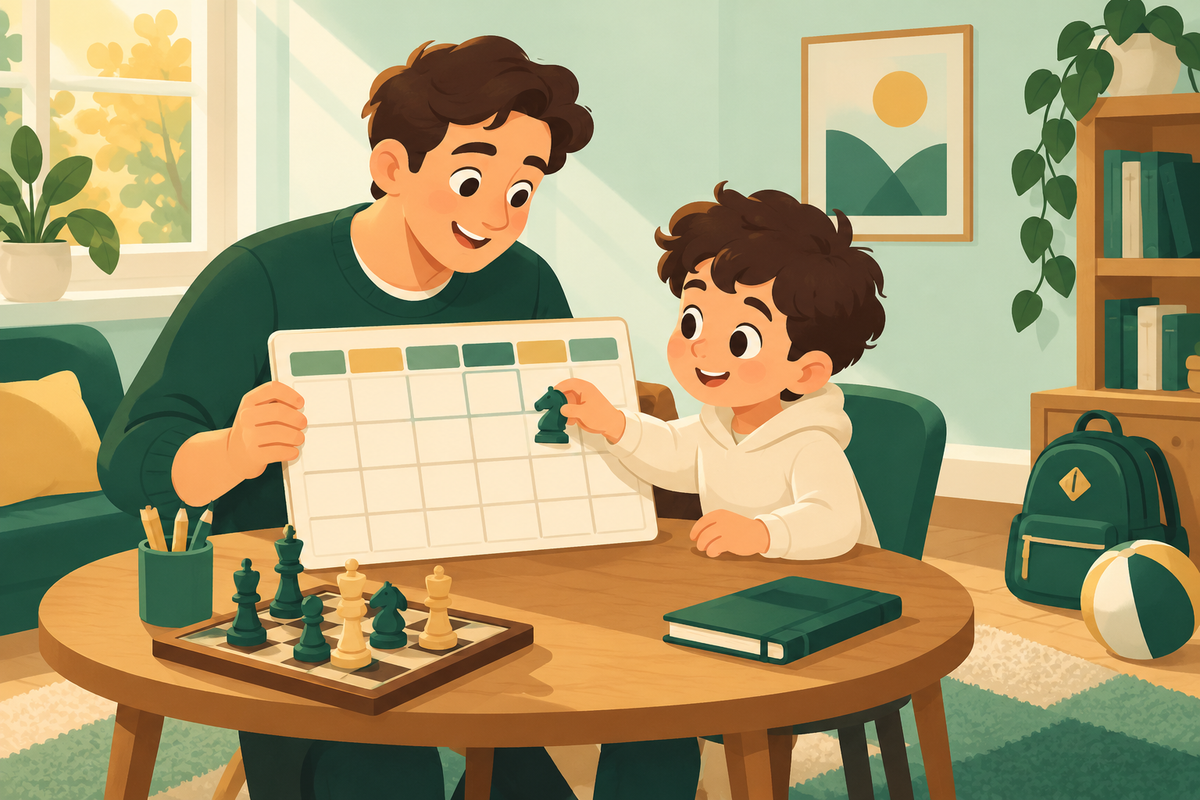
Before booking a package, look at the whole week: school, other activities, sleep, the length of each lesson and whether your child actually wants to play between classes. A timetable that works on paper may feel very different on a tired weekday evening.
Compare what happens in a lesson
A class count does not tell you how much useful attention a child receives. Ask whether they get to solve positions, explain their choices and receive feedback. Also ask how the coach chooses the next topic.
Two lessons spent watching material the child already knows may be less helpful than one suitable lesson followed by a chance to try the idea. Equally, a child who keeps getting stuck without feedback may benefit from more guided time. These are decisions to make from observation, not from a promised rating increase.
Separate lesson time from practice time
A lesson introduces or clarifies an idea. Practice gives the child a chance to use it. The Tirupur District Chess Association's beginner guide encourages regular, enjoyable practice rather than forcing long sessions.
Practice need not mean another online class. It could be replaying a position from the lesson, trying a few relevant puzzles or playing a thoughtful game and bringing a question back. Our home practice guide has ideas for getting started.
Two possible weekly arrangements
These are planning examples to discuss with a coach, not Project64's published timetable or a required learning schedule.
One lesson with space to try the idea: attend the lesson, revisit its main example on another day, then play a practice game when the child has energy. Bring one question to the next lesson.
Two lessons with different purposes: use one for a new topic and another for feedback or applying it, if the coach offers that structure. Leave time between them for the child to have a go independently.
Do not fill every available evening simply because a package includes more sessions. The question is whether the child can use the teaching, not whether the calendar looks busy.
When to discuss adding another class
Consider reviewing the schedule when the child regularly asks to play more, arrives with questions and can manage the current commitments comfortably. Ask the coach what an extra session would address. A specific answer, such as reviewing games that currently go undiscussed, is easier to evaluate than “more is always better.”
Upcoming tournament preparation may also change the type of support needed. Ask about the actual event and the child's readiness before adding lessons just because an event is near.
When to simplify the schedule
If lessons are repeatedly missed, homework is crowding out rest or the child starts dreading chess, discuss the timing, format and workload. Reducing the number of chess classes a week is one option; a different class level or lesson time may be another.
Agree on a date to review the arrangement. Look for concrete observations: can your child explain the topic, attempt it in a game and tell the coach where they got stuck? Our guide to beginner chess progress offers useful questions beyond wins and losses.
Questions to ask before paying
How long is each lesson, and how much participation is expected?
Is it a group or individual class, and is the level suitable?
What practice is suggested between lessons?
What happens if a class is missed or the schedule needs to change?
How will we review whether this frequency is working?
Project64 offers group and one-to-one online chess classes for ages 5–16. Book a free demo to discuss your child's current level and the schedule your family can realistically maintain.