Chess Progress for Beginners: What Parents Can Look For
Wins tell you who won a game. Look at legal moves, safer decisions and explanations to understand what your child is learning from chess lessons.
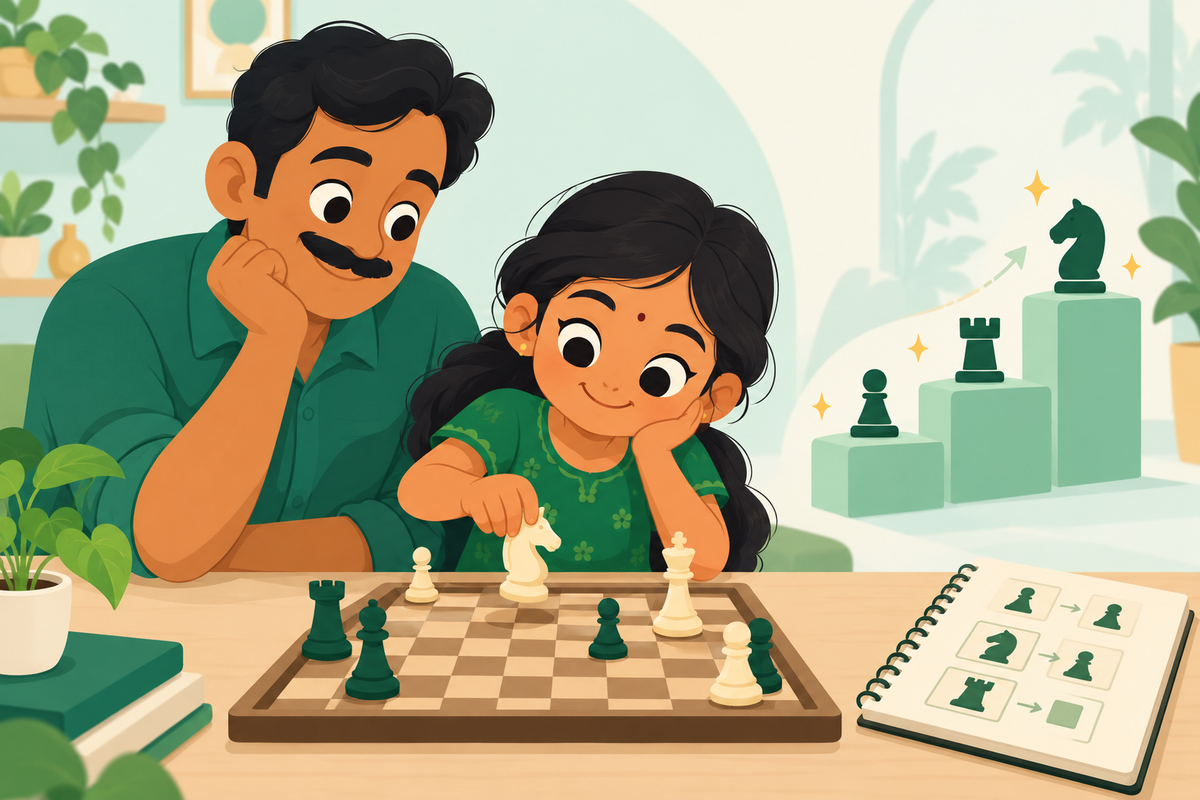
Chess progress is easier to discuss when you look at what your child can do independently: make legal moves, notice threats, explain a choice and learn from a mistake. Wins and ratings are useful pieces of information, but one result cannot show everything a beginner has learned.
A child may win because an opponent leaves a queen unprotected, or lose after playing several thoughtful moves. Ask the coach to show you examples from lessons and games. You do not need to become a strong player yourself to ask useful questions.
Notice what now needs fewer reminders
Start with your child's current learning goal. For a new player, that might be setting up the board, moving each piece correctly or recognising when a king is in check. For another beginner, it could be checking whether a piece is safe before moving it.
There is a meaningful difference between copying a move after an explanation and finding the move in a new position. Ask the coach whether your child can apply the idea when the pieces are arranged differently. An unfamiliar example is often more informative than repeating the same solved puzzle.
Look for a reason behind the move
After a practice game, choose one position and ask, “What were you trying to do here?” Keep the question curious rather than corrective. The answer may be very short: “I wanted to protect my rook” or “I thought the knight could take that pawn.”
The explanation does not need to be perfect. It gives the coach something concrete to work with. Over time, look for a connection between the child's intended plan and what the pieces actually allow.
Separate different kinds of improvement
Rules: Does the child recognise legal moves and basic game endings?
Board awareness: Do they notice an opponent's immediate threat more often?
Decision-making: Can they compare a couple of moves instead of choosing the first one they see?
Independence: Can they complete an appropriate task without someone pointing out the answer?
Reflection: Can they describe one thing to try differently in the next game?
Use this as a discussion list, not an examination or a timetable. Children can improve in one area while still needing support in another. Match the observations to the material being taught.
Keep a small observation log
Once a week, write down one example. Record the date, the skill, what happened and whether a reminder was needed. Keep the note factual: “Found that the bishop was attacked after the coach asked about threats” is more useful than “Had a bad class.”
Here is an illustrative entry: “Practised protecting pieces. In one new position, noticed the rook was undefended without help. Still needed a reminder to look at the opponent's move.” This captures both a success and a next step without giving the child a label.
Bring a few notes to the next parent update. They can help you and the coach choose one manageable goal, such as checking for an immediate threat before deciding on a move.
What if the rating is not increasing?
First check what the rating represents: which platform, which time control and how many games. Avoid comparing numbers from different systems as if they were interchangeable. A new rating or a handful of games gives limited context.
Ask the coach to review actual decisions. Are the same mistakes repeating? Is the child trying a new skill but not yet using it consistently? Does the practice match the lesson? Those questions provide a more useful next action than demanding a particular rating by a deadline.
Keep practice specific and manageable
Choose one activity linked to the current goal and finish while your child can still describe what they tried. For simple starting ideas, see our beginner practice guide. Avoid turning every family game into a lesson or giving hints during a competition.
Project64's parent updates cover attendance, practice and developing skills. If you are considering classes, book a free demo and ask which learning goal would be appropriate for your child. Clear examples make chess progress easier for everyone to understand.