Good at Chess Puzzles, Struggling in Games? What to Practise
A puzzle tells you there is something to find. A game asks you to decide what matters. Try a small practice cycle that connects the two.
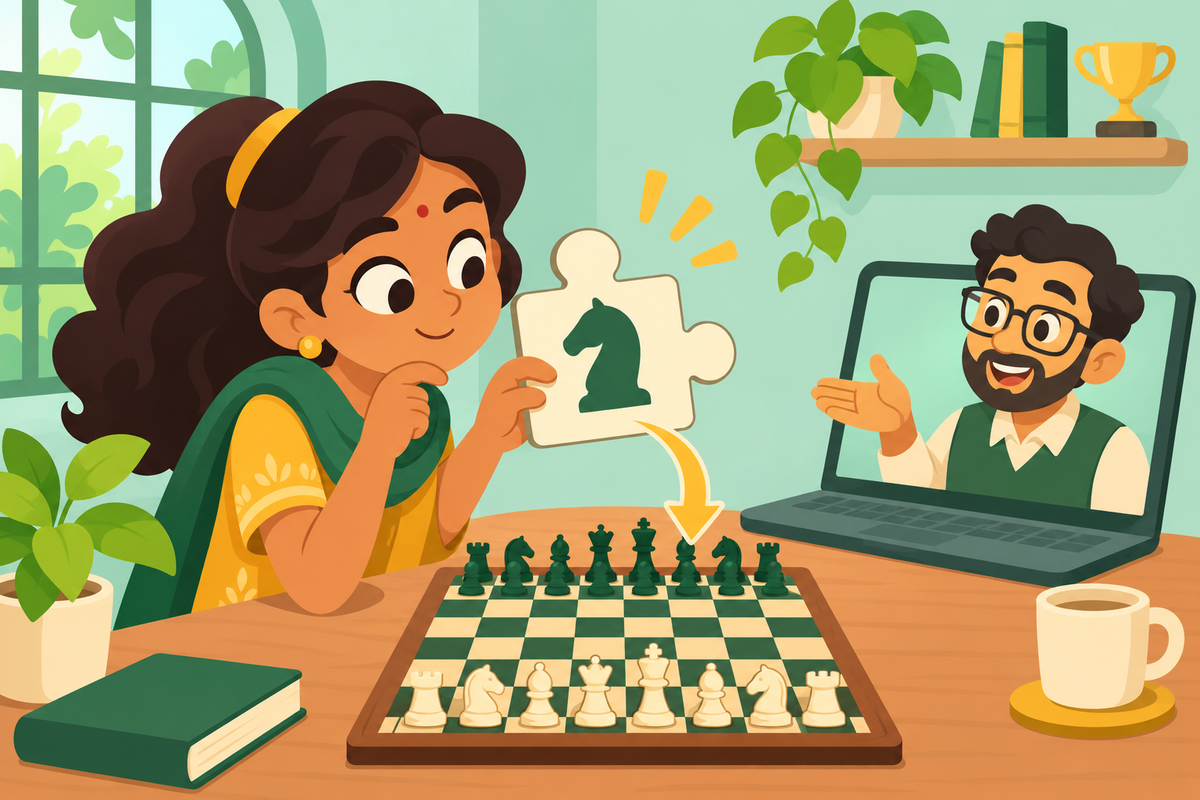
Being good at chess puzzles and finding the same ideas in real games are different tasks. In a puzzle, you know there is something worth finding. During a game, your child must first notice the opportunity, check the opponent’s threat and decide whether the idea works now. Practise that connection using one position from a completed game.
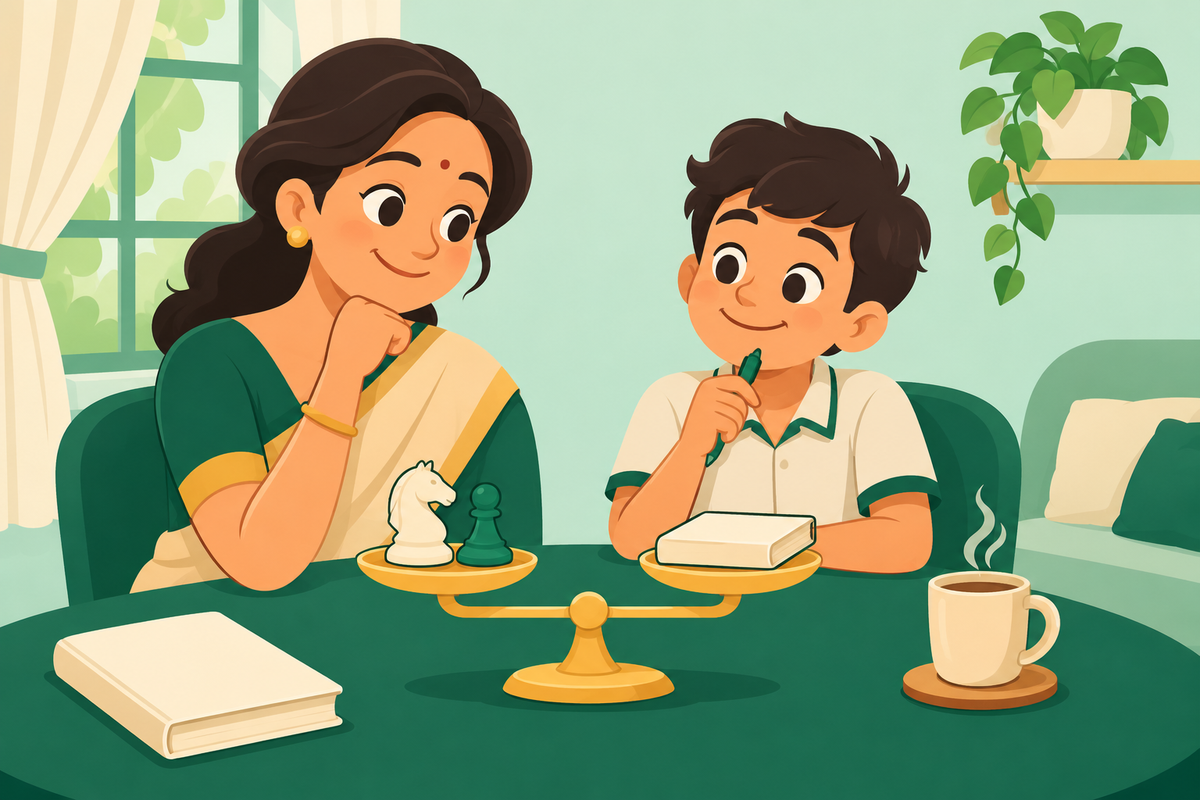
A missed fork does not mean the earlier puzzle practice was wasted. It gives you a more precise question: did your child recognise the pattern, calculate the reply, or overlook the chance altogether? The answer helps the coach choose the next exercise.
Find out where the connection breaks
Choose a completed game and ask your child what they remember thinking at one interesting moment. Avoid beginning with “You should have seen this.” Let them explain before showing the answer.
The idea is unfamiliar. If the child cannot explain a fork even when it is pointed out, return to a simpler example.
The idea appears after a hint. If “look for a fork” makes the move obvious, practise recognising when that pattern might be present without naming it first.
The first move is found, but the reply is missed. Ask the child to play the opponent’s strongest response before deciding the tactic succeeds.
The chance was noticed but another problem took priority. Check whether the king was in danger, a piece was hanging or the clock affected the decision. The whole position matters.
These are possibilities to investigate, not a diagnosis from a lost game. One result cannot tell you which explanation fits.
Connect chess puzzles to a complete game
Start with one puzzle your child can explain. Ask what feature makes the move possible: two targets lined up, an undefended piece, or a king with few escape squares. Naming the feature is more useful than memorising the destination square.
Next, use a small mixed set chosen with the coach. Include positions with different ideas and at least one where there is no immediate tactical win. Do not announce “every position is a fork.” Your child should be allowed to conclude that a safe developing move or defence is appropriate.
Then play a complete practice game with enough time to consider replies. Save it. Afterwards, look for one moment related to the exercise. If no matching pattern appeared, do not force a connection; pick another relevant decision. Our guide to reviewing a game before using an engine gives a simple way to begin.
An example: knowing a fork and checking whether it works
Imagine a child spots a knight move that would attack two pieces. Before moving, ask them during a lesson or agreed practice exercise to explain three things: which targets are attacked, whether the knight can be captured, and whether their own king remains safe.
The move may look like a familiar puzzle while failing because a pawn can take the knight. Learning to reject that tempting move is useful work too. This is a thinking exercise, not a specific board position or a claim that every fork wins material.
Keep help outside competitive games
Discuss the routine before play and review it afterwards. During a competitive game, the child makes the decisions independently; do not supply hints, suggest moves or run an engine alongside the game. FIDE’s Laws of Chess, Article 11.3.1, prohibit using outside advice during play. In a coaching exercise where guidance is part of the activity, agree when the coach will pause and ask questions.
Bring a useful question to the next lesson
Instead of asking for more chess puzzles in general, bring a completed game and say, “Can we compare a tactic my child solved in practice with a chance they missed here?” Ask for one manageable follow-up task. Our puzzle-solving guide covers how to work through an individual position carefully.
Project64 combines live online classes with assigned practice and game review. Book a free demo to discuss how lessons could connect with the games your child actually plays.