How Swiss Chess Tournaments Work: A Parent’s Guide
A loss usually does not end a child’s day in a Swiss event. Understand rounds, pairings and byes so you know what to check before the next game.
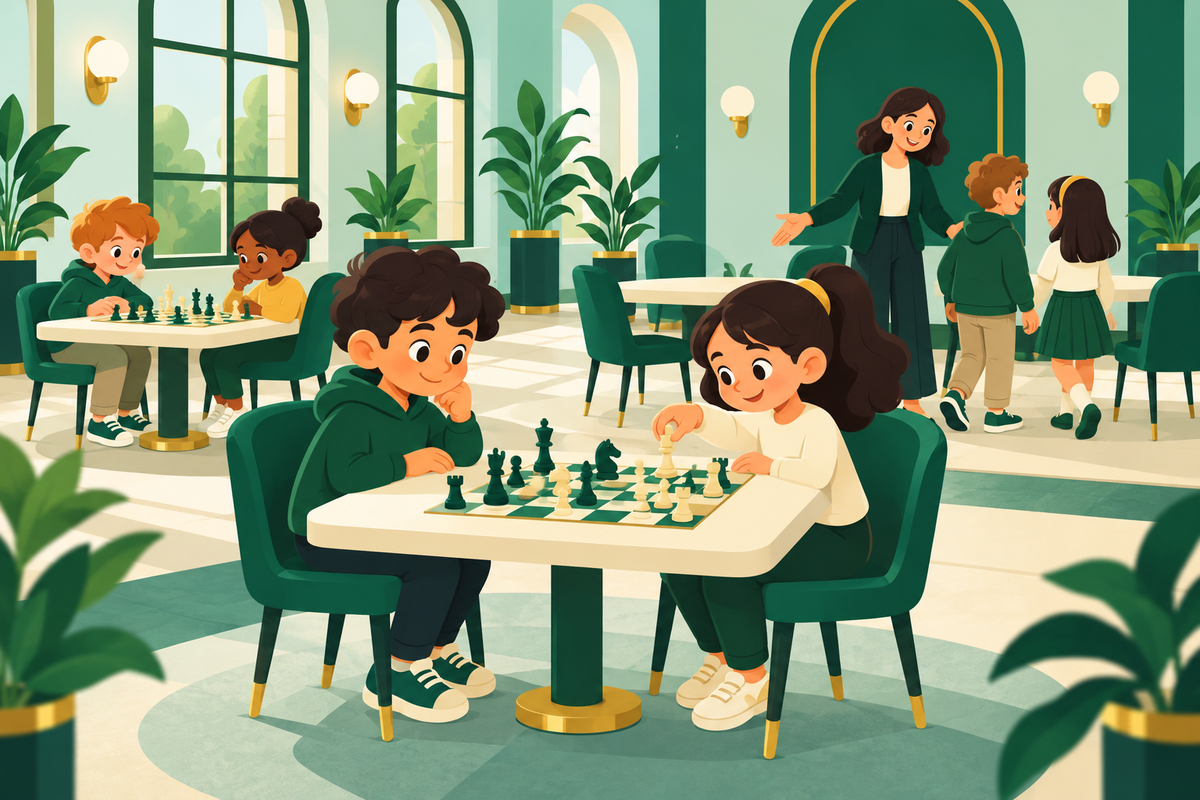
In Swiss chess tournaments, players take part over a set number of rounds, and losing a game does not normally eliminate them. Opponents are selected round by round, taking results into account. For a child’s first event, that means the next game can still be worth preparing for after a difficult start.
A round is one scheduled opportunity to play
A five-round event is organised around five rounds; it does not mean a player has to win five games. A bye or an opponent’s absence may mean a round passes without a game being played. Check the event’s timetable before planning when to leave.
Scoring is commonly one point for a win, half a point for a draw and zero for a loss. For example, a win, a draw and a loss would total 1½ points. The Swiss-system overview explains the format and notes that other scoring systems exist, so use the tournament’s published rules.
How the next opponent is chosen
The current FIDE basic Swiss rules, effective from 1 February 2026, generally pair participants on the same score and prohibit playing the same opponent twice. They also require the number of rounds to be announced beforehand.
The whole event is not a fixed bracket revealed on the first morning. Wait for the official pairing for each round. A similar score does not guarantee a similar rating, age or amount of experience; avoid promising that the next opponent will be easier after a loss.
Why your child may have the same colour again
FIDE’s rules aim to balance White and Black and generally favour alternating when the colours are balanced. That is not a promise to alternate every round. Specific systems can have exceptions to their colour limits. Ask the arbiter about a concern rather than swapping seats or opponents yourselves.
What a bye means
When an odd number of participants needs pairing, one can receive a pairing-allocated bye: no opponent and no colour that round. FIDE’s default awards the points for a win unless event rules specify otherwise. A request to miss a round is a different situation; check the organiser’s policy and deadline.
Do not interpret a bye as evidence that your child has beaten someone or as a judgment of their ability. Confirm when they must return for the next round, and use the gap for a break.
A simple routine between rounds
Report the result correctly. Follow the event’s process and check that the recorded score matches the game.
Find the new pairing. Confirm your child’s name, opponent, board number and colour.
Allow time to settle. Have water and a quiet pause before the next scheduled start.
Tell the organiser if you must leave. Ask how to withdraw so another player is not left waiting.
Before entering Swiss chess tournaments, ask how tied scores are ranked, where pairings will be posted and whom parents should approach with questions. You do not need to calculate the pairings yourself.
Our first tournament checklist covers practical preparation, while the chess-clock guide helps children rehearse a timed game. If your child needs coaching before competing, book a free Project64 online demo to discuss their current level and a suitable next step.