How to Use a Chess Clock: A Beginner’s Guide for Kids
Learn whose time is running, what an increment adds and a calm move-then-press routine. A practical introduction before a child’s first timed game.
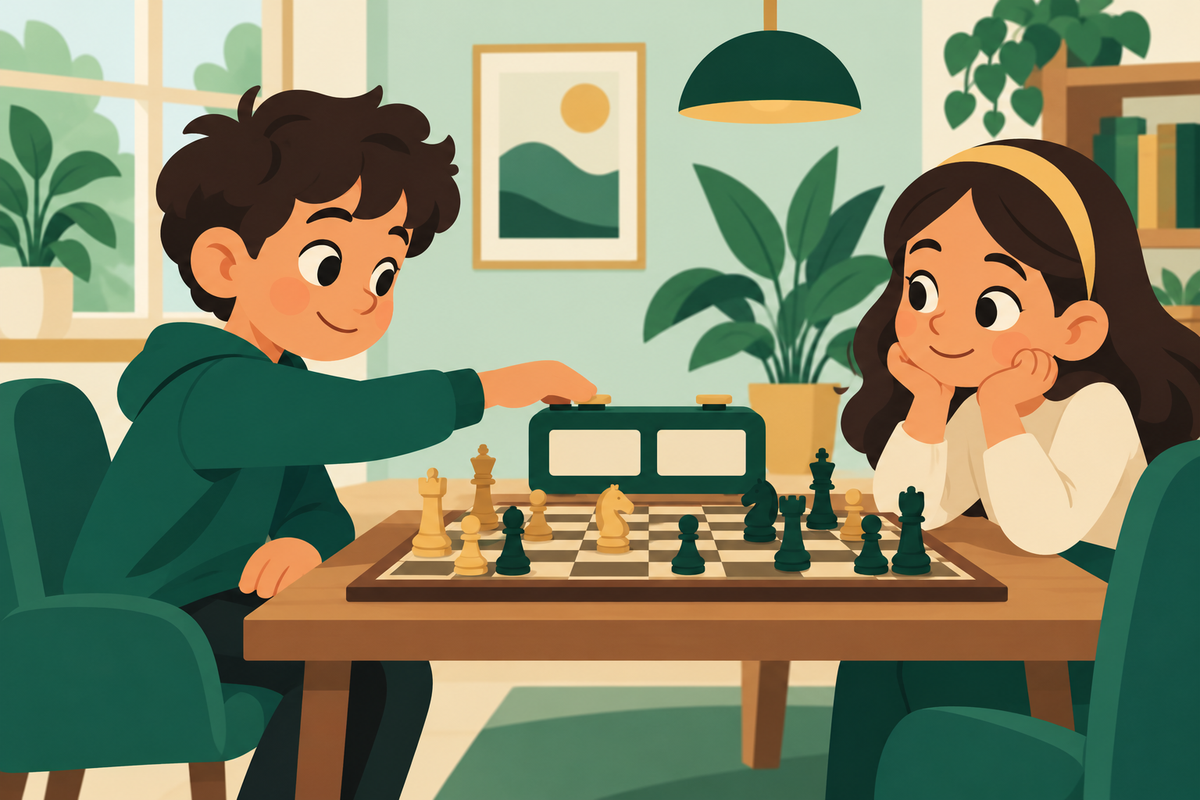
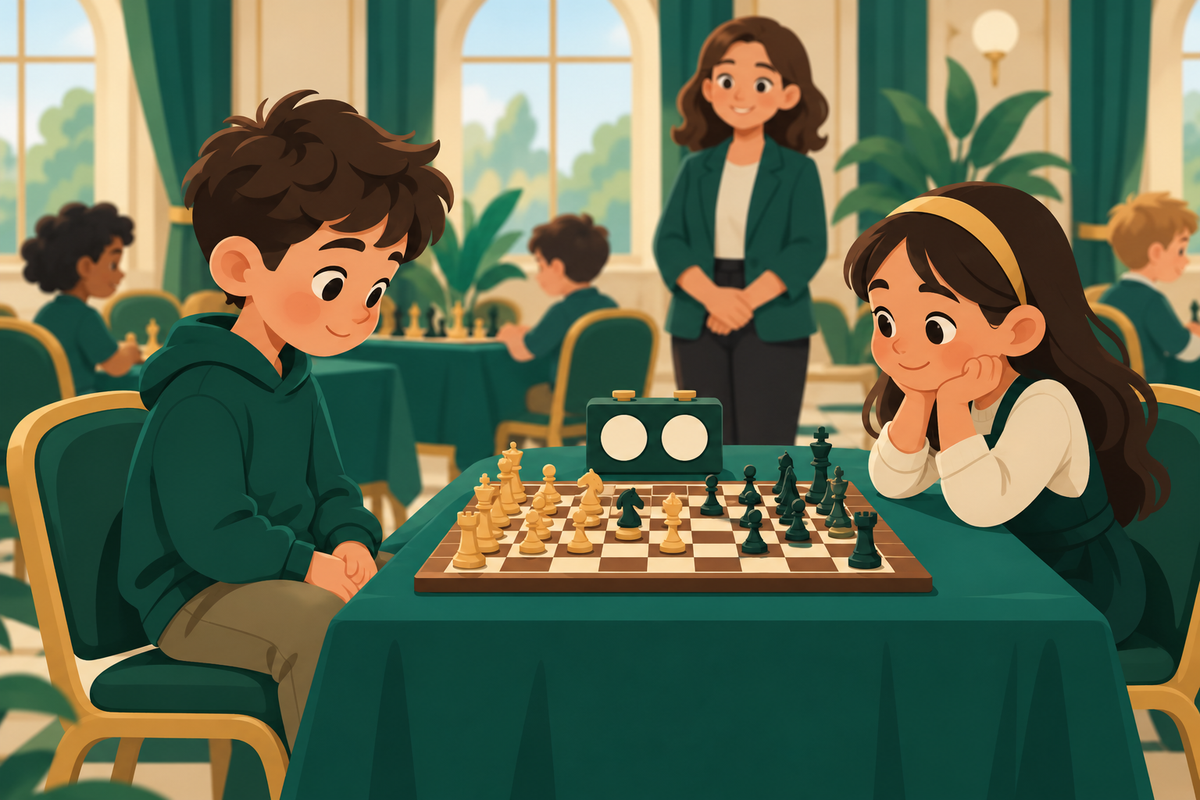
A chess clock gives each player their own thinking time. Normally, only one side counts down at a time. After making a move, a player presses their button to stop their clock and start the opponent’s. Practise that sequence calmly before adding the pressure of a competition.
The useful first goal is not to move as fast as possible. It is to know whose turn it is, make a legal move and handle the chess clock confidently.
What does 15+10 mean?
In this common format, each player starts with 15 minutes and receives 10 extra seconds per move. The added time is called an increment. It is not a new 15-minute allowance for every move.
For example, suppose a player has 4 minutes 20 seconds left, spends 12 seconds thinking and then completes the move. Adding the 10-second increment leaves 4 minutes 18 seconds. The clock can go down overall even though time is added after the move.
The official time-control guide explains this minutes-and-seconds notation. Event formats can be more complex, so check the organiser’s published time control rather than assuming every clock works the same way.
Use a move-then-press routine
Under FIDE’s clock rules in Article 6, the same hand used to make the move must press the clock. Do not press before moving, hit the button forcefully or keep a finger hovering over it.
At home, start with an unhurried practice game. Let the child make a move, release the piece and gently press their button. Then ask whose time is running. Repeat until the sequence feels familiar, without treating a forgotten press as a disaster during the lesson.
If your child is also new to handling pieces in tournaments, practise the touch-move routine separately before combining the two.
A first chess clock practice session
Explore the equipment before playing. Identify the two displays and buttons. With the clock stopped, ask the child to point to their side.
Set up a practice game. Use a comfortable amount of time agreed with the coach. The learning aim is using the clock, not winning a speed contest.
Notice the sequence. In this agreed teaching exercise, pause the lesson between turns to talk about a missed press or a confusing display.
Finish with one observation. Ask what felt easier and what needs another try.
This is a home teaching exercise. During a competition, parents should not provide reminders or advice across the board. Discuss the event’s procedures with the organiser beforehand.
When the time starts to feel short
A child may rush simply because they see a clock. After the game, ask where they felt hurried and whether there was time available at that moment. Bring one position to the coach to discuss how to balance checking a move with keeping the game going.
If the child is still struggling to complete legal moves, practise that skill without a clock first. Introduce the equipment again when it can be one manageable addition to the game.
What if time runs out or the clock seems wrong?
Running out of the allotted time normally loses the game, but FIDE rules include an exception when the opponent cannot possibly checkmate through any legal sequence. Let the arbiter decide a disputed result. For a clock problem, seek the arbiter’s help; do not reset the device or change its settings yourself.
Before entering an event, ask about the clock, time control and how children should request assistance. Our first tournament checklist covers other preparations.
When you book a free Project64 demo, mention whether your child has played timed games. You can discuss whether basic clock practice belongs in their next learning steps.