Starting Chess at 12: A Beginner Does Not Need to Catch Up
Start from what your child knows and wants to try. A suitable first class should respect their age while teaching the rules and habits they still need.
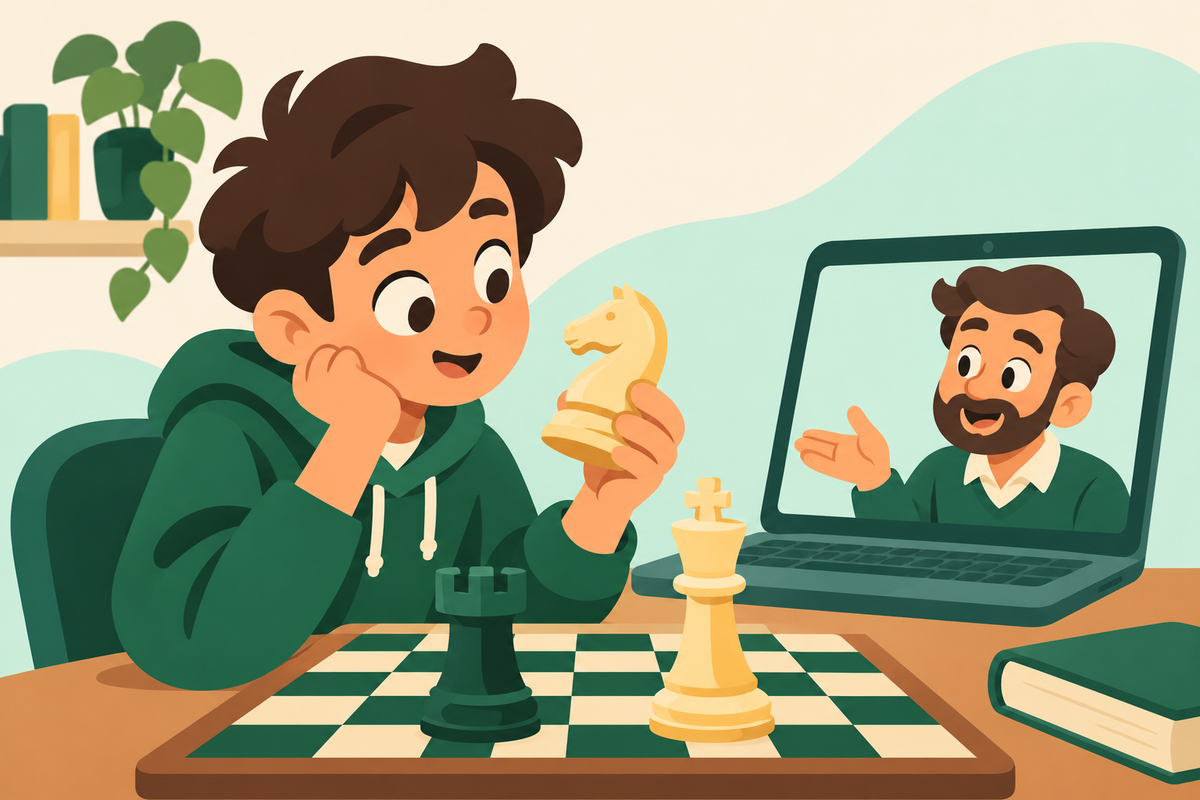
Starting chess at 12 is a reasonable choice for a child who wants to learn the game. They can begin with the rules, practise playing complete games and decide later how much competition interests them. They do not need to reach the level of a younger, experienced player before they are allowed to enjoy chess.
The question “Is it too late?” often hides two different goals: learning an enjoyable skill and pursuing elite competitive results. A first lesson can help with the first. Neither a starting age nor a course can promise the second.
Choose a goal the child actually wants
Ask what made chess interesting to them. Perhaps friends play at school, they watched a game online or they want to understand the board at home. Use that answer to choose a first goal, rather than assigning a rating target immediately.
For example, “I want to finish a game with my friend without needing help with the rules” gives a coach something concrete to work towards. It also makes progress easier to discuss than “I need to be good at chess”. The child can change that goal as they discover more.
Age and chess experience answer different questions
A twelve-year-old may be new to every piece, know the moves from an app or play full games while missing a few rules. Tell the coach which description fits. Being older should not mean skipping a rule the learner has never met; being a beginner should not mean being spoken to as a much younger child.
Before a trial lesson, ask how the teaching language and activities are adapted for an older beginner. In a group, ask how experience levels are matched and how learners get a chance to explain their thinking. Do not assume that the youngest person in the room is the least experienced.
Try a small starting check, without making it an exam
Invite your child to show what they already know on a board. If they want help, supply it; the aim is to choose a starting point, not award a score.
Can they set up the pieces and show how each one captures?
Can they explain what a player must do when their king is in check?
Can they tell when a game has ended?
Can they explain one move they considered in a recent game?
Bring the uncertain parts to the demo. If the child already plays online, a saved game may reveal more useful questions than a rating alone. Our guide to learning milestones separates knowing the rules, managing a game and making stronger decisions.
Make the first practice task easy to start
Agree on one small task between lessons: replay a position from class, explain a rule to a family member or finish a friendly game and save one question. Give the task a clear stopping point. A large list of apps, videos and opening lines can wait until the learner knows what each resource is for.
If your child enjoys independence, ask the coach what they can manage themselves and what help is useful from a parent. Offer practical support with the device, time and joining instructions. Avoid taking over the moves to make a practice game look better.
Handle comparisons with a useful question
When a younger player knows more, try asking, “What is one thing you would like to understand from that game?” This directs attention to a learnable task without pretending that the difference in experience does not exist. There is no need to turn another child’s progress into a deadline.
Project64 offers live online chess classes for children aged 5–16, including complete beginners, with 1:1 and group options. In a free online demo, explain your child’s experience and ask how the proposed class would fit an older beginner. Then ask the child whether the explanation felt clear and whether they would like to try another lesson.