Group or One-to-One Chess Classes: Which Suits Your Child?
Both formats can support a beginner. Compare interaction, pace, confidence, and practice to find a learning environment that suits your child.
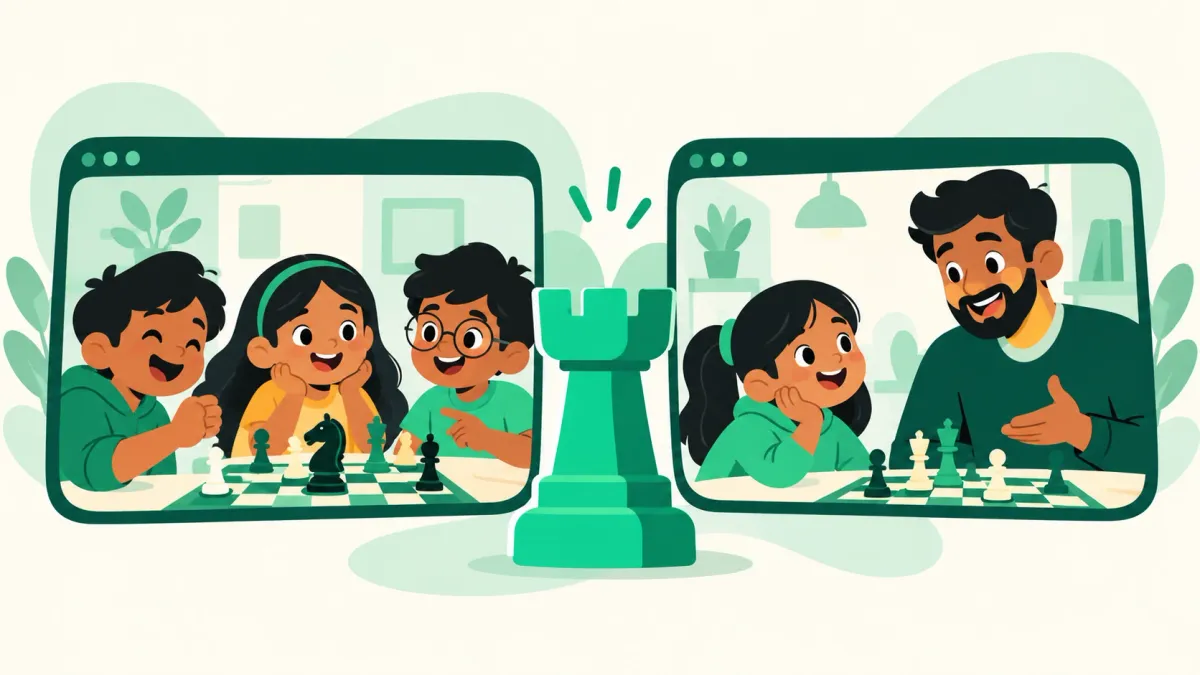
One child loves hearing how other students solved a problem. Another wants a little more time before sharing an answer. When choosing chess lessons, those preferences can matter as much as whether your child already knows the rules.
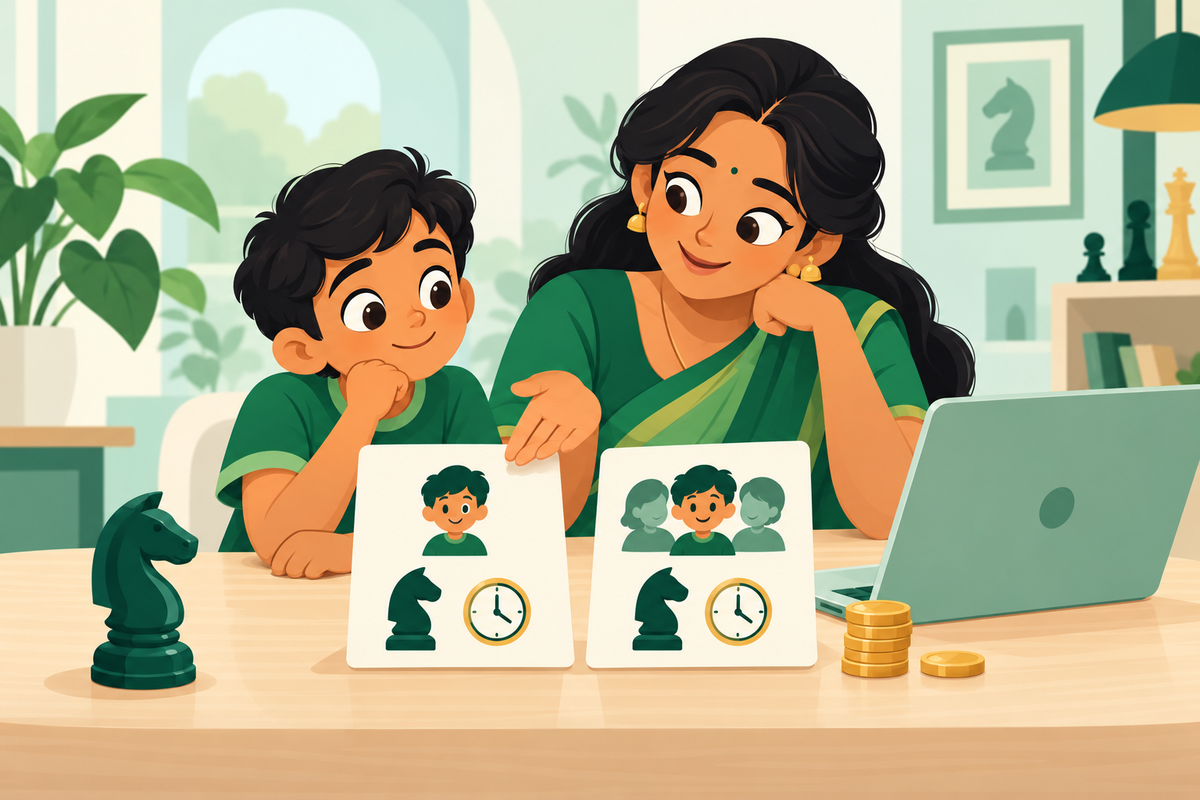
Group and one-to-one chess classes can both work for beginners. The useful comparison is how each format handles participation, pace, and feedback for your particular child. Neither format automatically guarantees faster progress.
What group classes can offer
In a well-run group, children can hear different ideas about the same position. A student might suggest moving a rook; another might notice that its path is blocked. With a coach guiding the discussion, the class has an opportunity to examine both ideas.
That shared experience may appeal to a child who likes learning alongside others. It can also make mistakes feel ordinary: everyone is practising something unfamiliar. The value depends on the group’s level and on how the coach manages turns, explanations, and encouragement.
Ask how the academy matches students. A child still learning piece movement may need different activities from a child who already plays complete games, even if they are the same age.
What to check before joining a group
Find out how often each child gets to answer or move a piece. Ask what happens when one student needs an explanation repeated. A good answer should describe the teaching routine, not simply promise that every child receives attention.
Also ask about the regular timetable and how missed lessons are handled. Do not assume recordings, replacement sessions, or changes of batch are included; confirm the academy’s actual arrangements before deciding.
What one-to-one coaching can offer
An individual session allows the coach to focus the explanation and practice on one learner. If your child understands a move but struggles to explain it, the coach can spend more time on that conversation. If an idea is already familiar, the session can move on without waiting for a group.
This can be useful when a child needs a different pace or has a specific learning goal. It does not mean a child must be advanced to benefit from individual attention. It also does not mean every beginner needs it.
Ask how practice games and independent work fit around individual lessons. Chess involves making decisions without a coach supplying the answer, so opportunities to try ideas independently still matter.
Let the demo challenge your assumptions
It is tempting to decide that a quiet child should only learn individually, or that an outgoing child will automatically enjoy a group. Those are starting guesses rather than reliable rules. A quiet child may participate happily when the coach gives them time; an outgoing child may find waiting for a turn difficult at first.
During a demo, notice whether your child can follow the explanation, attempt a move, and recover from an error. Afterwards, ask the coach which format they recommend based on what they observed. If the demo is individual, remember that it cannot show every aspect of the future group experience; ask about that separately.
A simple way to compare the options
- Participation: How will my child get regular chances to try and explain?
- Pace: What happens if they need more time—or are ready to move ahead?
- Practice: Where will they use the ideas independently?
- Feedback: How will I know what is becoming easier?
- Routine: Can we attend consistently without rushing from another activity?
The answers should help you choose a starting format. Revisit the decision if your child’s needs change; ask the academy about available options rather than treating the first choice as permanent.
Project64 offers group and one-to-one online chess classes, with English and Tamil teaching available. If you are undecided, select “Not sure yet” when requesting a demo. Book a free online demo with Project64 to discuss a suitable starting point. Our beginner-class checklist offers more questions to bring along.